
Digital Marketing
How to Do Your Own Digital Marketing: A Practical 90-Day Plan for Small Businesses
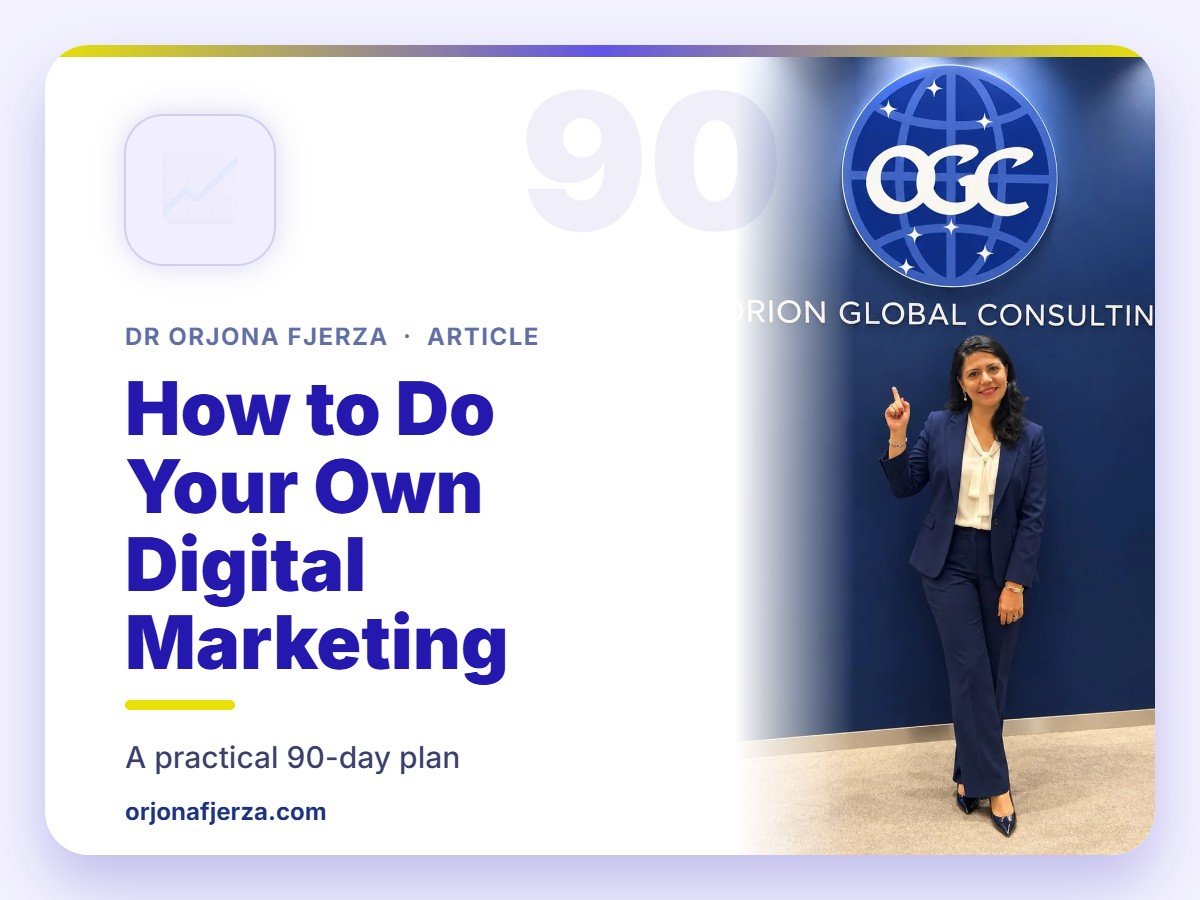
Most small business owners I meet do not need a bigger marketing budget. They need a simple system they can run themselves, every week, without guessing. After consulting more than 5,000 businesses and building Orion Global Consulting to more than 100 clients, I can tell you that the firms that grow are rarely the ones with the flashiest campaigns. They are the ones that show up consistently, in the right places, with a clear message.
This guide shows you how to do your own digital marketing step by step, using tools you already have and a few hours a week. It works for accountants, consultants, trades and local service businesses alike.
1. Start with one clear message
Before you post anything, write one sentence that answers three questions: who you help, what problem you solve, and why you are the right choice. For example: “We help growing construction firms in South West London win more profitable projects through faster, clearer quotes.”
Use this sentence on your website homepage, your Google Business Profile, your LinkedIn headline and your email signature. Consistency builds recognition, and recognition builds trust.
2. Know exactly who you are talking to
Write down your three best clients from the last year. What do they have in common? Their sector, size, location, the question they asked you first. That is your ideal client. Every piece of content you create should speak to that person — not to “everyone”.
3. Fix your foundations: website and Google Business Profile
Your website and your Google Business Profile do most of the selling before anyone calls you. Check these basics:
- Your homepage says clearly what you do and where, above the fold.
- Every page has one obvious next step: call, book, or send an enquiry.
- Your website loads quickly and works properly on a mobile phone.
- Your Google Business Profile has the right categories, opening hours, services, photos and a link to your booking page.
- Your business name, address and phone number are identical everywhere online.
4. Do the SEO basics yourself
Search engine optimisation sounds technical, but the fundamentals are simple. Make a list of the ten questions clients ask you most often. Each one is a potential blog post or service page. Give every page a clear title that includes what you do and where (for example “Bookkeeping for Small Businesses in Twickenham”), a short meta description that invites the click, and one main heading.
Today, people also ask AI tools such as ChatGPT and Google’s AI answers for recommendations. Clear, well-structured answers to real questions help you appear there too. If you want to go deeper, our team explains it in What Is AI SEO?
5. Choose two channels, not ten
The biggest mistake I see is trying to be everywhere. Pick the two channels where your ideal clients already spend time. For most professional services that is LinkedIn and Google. For hospitality and retail, it is often Instagram and Google. Master two channels before adding a third.
6. Build a simple weekly content rhythm
You do not need to post every day. You need a rhythm you can keep. Here is the one I recommend to most business owners:
- Monday: one helpful tip that answers a common client question.
- Wednesday: one proof post — a result, a testimonial or a short case study (with permission).
- Friday: one personal post — behind the scenes, your values, or a lesson you learned this week.
- Once a week: one Google Business Profile update.
- Once a month: one longer blog article on your website.
Batch your content: block two hours on the first Monday of the month and plan everything in one sitting. AI tools can help you draft ideas and outlines, but always add your own experience and voice. That is what makes content trustworthy.
7. Turn attention into enquiries
Visibility without a conversion path is wasted effort. Make it easy to take the next step: a booking link, a short contact form, a WhatsApp button. Then reply fast. In my experience, the business that answers first usually wins the client. Add a simple follow-up email for everyone who enquires but does not buy straight away.
8. Ask for reviews every single time
Google reviews are one of the strongest signals for both customers and local search. Create a short review link from your Google Business Profile and send it to every happy client at the moment they thank you. Reply to every review, positive or negative, professionally and personally.
9. Measure five numbers once a month
You cannot improve what you do not measure. Keep a simple spreadsheet and track these five numbers monthly:
- Website visitors (Google Analytics)
- Calls, direction requests and website clicks (Google Business Profile insights)
- New enquiries
- Enquiries that became clients
- New Google reviews
If enquiries rise but conversions fall, fix your follow-up. If visitors are flat, focus on content and SEO. The numbers tell you where to spend your next hour.
Your 90-day DIY digital marketing plan
- Days 1–30 — Foundations: write your message, define your ideal client, fix your website basics and complete your Google Business Profile.
- Days 31–60 — Consistency: start your weekly content rhythm on two channels, publish two blog articles and begin asking for reviews.
- Days 61–90 — Conversion: add a booking link everywhere, set up a follow-up email and review your five numbers to decide what to double down on.
When to do it yourself — and when to get help
Doing your own digital marketing is the best way to learn what works for your business. But there comes a point where your time is worth more serving clients than writing posts. If you are ready to grow faster, my team at Orion Global Consulting can run SEO, content, AI automation and lead generation for you, so you can focus on delivery.
If you would like a second pair of eyes on your plan, book a 30-minute strategy session with me. I will help you choose the right channels and the first three actions that will move the needle for your business.
Dr Orjona Fjerza is the Founder and CEO of Orion Global Consulting, a university lecturer, author and international speaker who has helped thousands of businesses grow through AI-first digital marketing.